
The Friction Was the Point: A history of online anime fandom before the algorithm ate it.
You didn't just watch anime in 2002. You earned it.
You navigated IRC channels. You configured packet transfers. You sat through a forty-minute download on a 56k connection, praying your mom didn't pick up the phone. You learned which file extensions mattered and which ones were bait. You knew the difference between a VHS rip and a genuine fansub. You had opinions about encoding groups the way other people had opinions about sports teams. And when you finally got the episode, when the file finished and you double-clicked it and the opening theme hit — it meant something. Because you did something to get there.
That's gone now. This piece is about what replaced it, what was lost in the exchange, and why it matters more than most people realize.
Before the Web: The Labor Theory of Fandom
The story doesn't start with the internet. It starts with VHS tapes and university clubs.
In the 1980s, dedicated fans paid contacts stationed in Japan to record live television broadcasts, physically mail the tapes across the Pacific, and wait. Organizations like the Cartoon/Fantasy Organization, founded in 1977, screened imported Japanese animation for audiences who had never seen anything like it. Upper-level Japanese language students subtitled the broadcasts by hand. Copies were made. Copies of copies were made. The media traveled through physical networks of people who cared enough to make it move.
This era established the foundational ethic that would define everything that came after: access to anime was something the community built for itself. The people who did the work held the social capital. The media was not a product you consumed. It was a thing you participated in.
That ethic survived the transition to the digital age. It just got bigger, faster, and considerably more complicated.
Planet Namek and the Wild West Web.
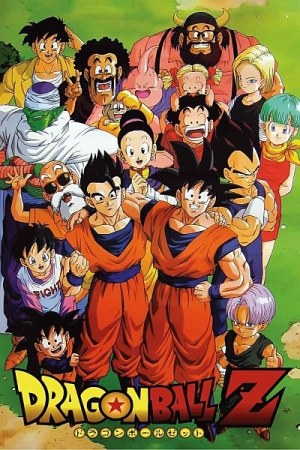
When Dragon Ball Z hit Cartoon Network's Toonami block in the late 1990s, the floodgates opened. An entire generation of kids who had never heard of anime suddenly needed more. They found the internet. They found fan sites. And the most influential of those fan sites, for better and considerably for worse, was Planet Namek.
Planet Namek was built by a webmaster called MrE. The origin story is not flattering. He scraped images, MIDI files, and text from smaller, more specialized DBZ sites and consolidated them into a single hub. Attribution was an afterthought. Credit was someone else's problem. But MrE had secured a clean domain name at a time when most fan sites were buried on Geocities subdomains, and he had optimized aggressively for Yahoo's directory, which was how people found things before Google. Planet Namek became the default landing page for an entire generation searching for Dragon Ball Z content.
With the traffic came scrutiny. MrE eventually integrated into the #db IRC channel, the elite digital gathering space for prominent DBZ site owners and early fansubbers. What he found there was hazing. The established community resented his aggregation methods and his disregard for attribution ethics. The sustained pressure, combined with the stress of managing a massive online population he had never anticipated, transformed him. Peers described the shift: a naive kid desperate for acceptance hardened into a cynical operator who despised his own users.
That arc is not unique to MrE. It is practically the unofficial biography of the early anime webmaster. The community was extraordinary but it was also chaotic, exhausting, and relentless. The burnout was structural.
Funimation, Censorship, and the Community That Fought Back
While this was happening, the licensed side of the industry was making a mess.
To get Dragon Ball Z onto American daytime television, Funimation performed heavy, systemic surgery on the source material. Character deaths became characters "going to another dimension." Dialogue was rewritten for forced humor. The original Japanese score was replaced with a synthesizer and heavy metal soundtrack designed to appeal to American teenagers. The early Dragon Ball localization injected references to power levels that did not exist in the original Japanese scripts.
The online community was not quiet about this. Sites like Planet Namek, DBZ Uncensored, and Daizenshuu EX published exhaustive, frame-by-frame comparisons of every visual cut, every altered line of dialogue, every music replacement. They organized boycotts of localized DVDs. They ran structured campaigns against Funimation's localization choices with a level of coordination that would be impressive from a professional advocacy group, let alone a collection of teenagers on dial-up.
Funimation responded with Cease and Desist orders. Working through the newly enacted DMCA, their lawyers targeted the ISPs and hosting companies upstream of the fan sites, forcing server suspensions and account terminations without touching a single residential doorbell. The collective memory of the fandom has inflated this into stories of FBI raids on teenage bedrooms. That is not what happened. What happened was quieter and, in some ways, more effective: the legal infrastructure was weaponized against the digital infrastructure, and fan sites were forced into constant migration.
The resolution was not what anyone expected. Funimation began hiring from within the community that was publicly criticizing them. The most significant case was Steven Simmons, known online as Daimao. A respected fixture in the #db IRC channel, Simmons was brought in as Funimation's lead translator. The grassroots community called it a Metal Gear Solid-style infiltration. What it actually was: proof that six years of organized, vocal, documented fan protest had moved a corporation. Funimation eventually released uncut, bilingual DVDs. They dropped the heavy localization practices. They listened.
The community won. It just took longer than anyone wanted.
The DDL Era: dbzdivx, pbxanime, and the Malware Tax
As internet infrastructure matured in the early 2000s, the community moved away from IRC bots and RealMedia files. HTTP Direct Downloads were simpler. You went to a website, clicked a link, and downloaded a video file. No IRC client. No packet configuration. No seeding ratios. Just a browser and a broadband connection.
This democratization of access built the DDL era around massive index sites. dbzdivx was the gold standard: a central hub that catalogued high-quality DivX encodes from independent fansubbing groups, maintained torrent trackers, and served as a reliable archive. It enforced quality controls. It was trusted.
pbxanime was the cautionary tale. The bandwidth costs for hosting massive video files were astronomical, and some operators decided to offset those costs through the Zango adware network. Users seeking the latest episodes were subjected to deceptive download managers, hijacked browser homepages, and malware that embedded itself deep into local machines and slowed them to a crawl. Free anime, paid for with your system's performance and your personal data.
Here is the thing about the malware problem: it reinforced community participation. Safe consumption of anime in that era required institutional knowledge you could only get from people who had been there longer than you. Which sites were clean. Which encoding groups to trust. Which forum members posted safe links. You had to show up. You had to ask. You had to be present in the community to navigate it safely. The friction created dependency and dependency created belonging.
NarutoFan, Tazmo, and the Monetization Betrayal
As DBZ began to wind down, the fandom pivoted to Naruto. The ethical fractures that had been developing since the Planet Namek era finally tore open, and the rupture had a name: Tazmo.
NarutoFan.com launched in 2003 and became the dominant destination for Naruto content on the internet almost immediately. Tazmo solicited donations, ostensibly to cover server costs. Then the advertising revenue exceeded any reasonable operating cost estimate by a significant margin. Then came NarutoFan PLUS: a paid subscription service that placed direct download links behind a hard paywall.
Tazmo was selling the volunteer labor of fansubbers and scanlators for personal profit. That alone would have been enough to incite serious backlash. But he also stripped the original credits from the files, replacing them with his own NarutoFan branding. He was not just monetizing the work. He was obscuring its origin to prevent his paying subscribers from discovering it was available for free directly from the groups who created it.
The fandom's ethical code on this point was ironclad. Fan works were to be distributed for free. Profiting from volunteer labor was the ultimate betrayal. And stripping credits was an act of aggression against the people who produced the content in the first place.
The scanlation groups responded by going to war. Inane, the prominent Naruto translation group, demanded their content be removed from NarutoFan's servers. Tazmo refused. So they began hardcoding aggressive, un-removable watermarks and inserting full-page text manifestos into the middle of the manga chapters they released: "If you paid for this, you were robbed." Directing readers to the free source sites by name.
The legal paradox here is genuinely extraordinary. Copyright infringers were utilizing digital watermarking techniques to protect their stolen, uncopyrightable derivative works from being commodified by a secondary pirate. The piracy ecosystem had developed internal intellectual property law.
StopTazmo.com launched in 2004 to formalize the resistance. It hosted the same content NarutoFan was charging for, entirely for free, while also running educational campaigns about fansub ethics and publishing detailed exposés of Tazmo's financial practices. The site fostered new translation initiatives from within its own user base. Major index platforms like MangaUpdates pinned the boycott notices to their front pages permanently.
None of it killed NarutoFan. Tazmo expanded into sister sites and captured the casual user market, which turned out to be enormous and largely indifferent to community politics. The end of the saga came not from grassroots action but from corporate precision: VIZ Media, the official North American Naruto licensor, filed an arbitration proceeding with the World Intellectual Property Organization arguing that the domain name NarutoFan.com constituted trademark infringement. The WIPO agreed. The domain was transferred to VIZ in 2011. The community that had spent years fighting Tazmo watched a corporation finish the job in a single legal maneuver.
Crunchyroll: The Pirate That Won
Crunchyroll launched in 2006. For its first two years it operated as an illegal streaming platform, harvesting fansub group output without consent, compressing their high-definition encodes into degraded Flash video, and monetizing all of it through display advertising. It was NarutoFan with better software and a Silicon Valley address.
The difference was what happened in 2008. Venrock, a prominent venture capital firm, invested $4.05 million. Bandai Entertainment and Funimation publicly condemned the investment as funding a commercial piracy operation. They were correct. But the investment came with an ultimatum: legitimize or lose the money. Crunchyroll's founders began traveling to Japan, using their pirate-era audience data as a bargaining chip to negotiate licensing deals with studios that had never considered the Western streaming market.
In January 2009, Crunchyroll announced a legal simulcast agreement with TV Tokyo for Naruto Shippuden. New episodes, professionally subtitled, available within hours of Japanese broadcast. The pirated content was purged. The model was flipped entirely.
The simulcast killed fansubbing more effectively than any legal threat had managed. The fansub community's ethical code required groups to drop projects once they were officially licensed. Crunchyroll licensed everything immediately. There was no longer anything left to fansub. The DDL sites lost their utility. The whole ecosystem that had sustained the community for a decade became structurally irrelevant overnight.
Gabe Newell's observation applies precisely here: piracy is a service problem, not a pricing problem. The fansub ecosystem existed because official releases were months or years behind Japanese broadcasts, locked behind regional restrictions, and priced for a market that did not yet understand what it had. The moment an official service matched the speed and quality that the underground had pioneered, the underground lost its primary justification. Crunchyroll grew to 400,000 paid subscribers by 2014. Sony eventually acquired it for multiple billions of dollars.
What Was Lost
The accessibility win is real and it is significant. Anime is now more widely available, higher quality, and more globally simultaneous than at any point in its history. That is not nothing.
But something specific was destroyed in the process, and the word "community" undersells it.
In the Planet Namek and DDL era, engaging with anime was participatory by necessity. You hunted for content. You navigated complex systems. You asked questions in forums and learned from people who had been there longer than you. You developed opinions about encoding groups and localization ethics and whether a given subtitle translation was accurate or a hack job. You accumulated cultural capital through demonstrated knowledge and contribution. You showed up, consistently, to a specific place, with specific people, who knew you.
Modern streaming replaced all of that with an algorithm. Crunchyroll disabled its video comment sections entirely, citing toxicity. The last thread of on-platform discussion was cut. Users are now consumers guided by recommendation engines designed to maximize watch time, not discovery. The serendipity is gone. The friction is gone. The social negotiation of taste is gone.
Veteran fans who describe nostalgia for the early 2000s internet are not romanticizing malware or illegal downloads. They are mourning an active, demanding, social mode of cultural participation that no longer has a structural home. The difficulty was not incidental. The difficulty was the mechanism that created the community.
When finding an anime required work, the reward was not just the show. It was belonging to the group of people who found it with you.
Why This Site Exists
AnimeHistory.org is a direct response to everything described above. Not a recreation of it, because you cannot recreate a historical moment by willing it back into existence. But a refusal to accept that the only alternative to Crunchyroll is passive, algorithmic, corporate-mediated consumption.
The fandom that built those sites in the early 2000s did not build them because it was convenient. It built them because it loved the medium and wanted the medium to have a permanent, honest, participatory home. The preservation instinct. The editorial voice. The insistence on doing the work rather than outsourcing cultural memory to a recommendation engine.
That's the lineage. That's what this place is for.
Sarutobi — AnimeHistory.org Editorial
~ edited May 21, 2026